If you’re a homeowner, electrician, or small business owner working with 16A distribution boxes, you’ve probably asked yourself this question at some point. Maybe you’ve encountered a wiring hiccup mid-install, can’t figure out why your circuit keeps tripping, or want to upgrade your box to fit new appliances—and you’re wondering if the brand you bought from, or any supplier for that matter, offers technical support for these lower-amperage units. As someone who’s spent the last 12 years as a technical lead at a dedicated 16A distribution box supplier, I can tell you that this is one of the most common, and most important, questions our team gets. Let me break down what technical support actually looks like for these boxes, what you can realistically expect, and how to make sure you’re accessing the right help for your needs. 16A Distribution Box
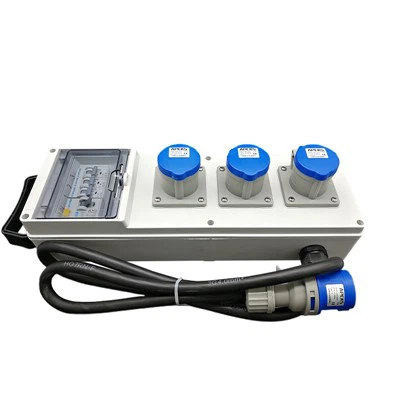
First, let’s get one thing straight: 16A distribution boxes aren’t the same as the big, industrial 100A+ units you see in commercial warehouses. They’re designed for residential and light commercial use—think powering kitchen outlets, bedroom circuits, small workshop tools, or even a backyard shed. Their compact size, lower amperage rating, and targeted use mean that technical support for them is specialized, not one-size-fits-all. I’ve seen customers assume that because a supplier offers support for their 200A panels, that same help applies to 16A boxes, and that’s where they run into issues. For example, last year we had a customer in Ohio who tried to use industrial circuit breaker troubleshooting guides for their 16A box, and they ended up miswiring a circuit that powered their home’s HVAC unit—costing them $800 in repairs. That’s why it’s critical to know that technical support for 16A units is tailored to their unique design constraints.
So, what does that technical support actually include, from a supplier like ours? Let’s start with the basics: pre-purchase support, which is for people who haven’t bought their 16A box yet, or are deciding which one fits their project. I’ve been on dozens of calls with electricians who come to us confused about whether a flush-mount 16A box is better for a small apartment renovation vs. a surface-mount unit for a garage. Our support team will ask specific questions: how many circuits do you need? Are you installing this in a wet area, like a bathroom? What type of wiring (NM, THHN, etc.) are you using? For 16A boxes, we can also walk you through load calculations specific to lower-amperage circuits—something that big-box store staff often don’t have the training to do. For example, a common mistake is trying to power a 1500W space heater on a 16A circuit; our team can explain that a 16A circuit at 120V can safely handle around 1920W, so that space heater would work, but you’d need to account for other devices on that same circuit to avoid overloading the box.
Then there’s post-purchase support, which is the most requested after someone has received their 16A box and hit a snag. I remember a call last spring from a handyman in Texas who was installing a 16A box for a customer’s vacation rental, and his GFCI (ground fault circuit interrupter) breaker kept tripping every time he turned on the laundry circuit. Instead of sending him a replacement breaker right away, our tech support team walked him through a few simple checks specific to 16A boxes: first, confirming that the neutral and ground wires weren’t swapped (a common mistake in smaller boxes where there’s less space for wire organization), then testing for a ground fault with a multimeter at the outlet, and finally checking that the circuit wasn’t sharing a neutral with another circuit—something that’s a big no-no for 16A units because of their lower load capacity. That call ended up saving the handyman the cost of a new breaker, and the customer was able to have their rental up and running on time. That’s the kind of targeted support only a supplier that specializes in 16A boxes can provide; a general electrical supplier might have sent a replacement without troubleshooting, which could have led to the same issue popping up again.
Another area of technical support that’s often overlooked is compliance and code alignment. 16A distribution boxes are subject to national electrical codes (NEC in the U.S., IEC in Europe, etc.) that vary based on location, and small mistakes can lead to failed inspections. Our team gets a lot of questions from electricians about how to mount a 16A box to meet clearance requirements, or how to label circuits correctly per code. For example, in the NEC, 16A circuits require that each circuit is clearly labeled with its amperage rating, because they’re often used for specialty appliances. I’ve had more than a few inspectors flag installations where the 16A box didn’t have proper labeling, and our team can send custom label templates, or walk through the exact wording required for your local code. This is way more helpful than generic code guides, which don’t account for the specific needs of 16A boxes.
Now, it’s important to set realistic expectations. Not every technical support request will be solved with a 10-minute call, and that’s okay. For example, if you have a damaged 16A box that arrived in transit, or a design flaw in a batch of boxes from a supplier, that’s a different type of support, and a reputable supplier will handle that quickly. But for troubleshooting issues that are common with 16A boxes—like tripping breakers, wire fitting issues, or compatibility with accessories like surge protectors—there are limits. For example, our team can’t tell you exactly what’s wrong with your home’s wiring outside of the distribution box, because that requires a full electrical inspection by a licensed electrician. We also don’t offer in-person installation support, because that’s a safety issue; only a licensed electrician should be working on live circuits, so our support is focused on guiding you through the information you need to do it correctly, not doing the work for you.
I also want to address a common misconception: some people think technical support for 16A distribution boxes is only for professional electricians, but that’s not true. We work with DIY homeowners all the time, as long as they’re working with a licensed professional if they hit a major issue. For example, last year a homeowner in Illinois reached out to us because they were replacing an old 16A box in their basement, and they weren’t sure how to run the new Romex wires through the knockout holes in the box. Our support team walked them through how to punch out the correct knockouts (not too many, to avoid compromising the box’s structure), how to strip the wire insulation without damaging the conductors, and how to tighten the breaker terminals to the correct torque—something that’s super important for 16A boxes, because loose terminals can cause overheating and fires. We always remind DIYers that if at any point the work feels too complicated, they should call an electrician, and that’s part of responsible technical support too.
As a supplier of 16A distribution boxes, our technical support is designed to be accessible, accurate, and specific to our products. We don’t outsource our support to a call center in another country where the team might not understand the unique needs of small-amperage distribution boxes; all our support technicians have at least 5 years of experience working with 16A and lower-amperage electrical components, and they’re trained on every model of box we sell. That means when you call, you’re talking to someone who knows exactly how our boxes are designed, what their limitations are, and how to help you use them safely. For example, one of our newer models has a built-in surge protector for the first two circuits, and our support team can explain exactly how that works, what circuits it’s best for, and how to test it after installation—something a general supplier might not be able to do.
I’ve heard from customers that some big-box retailers don’t offer technical support for their store-brand 16A distribution boxes, and that’s a big reason why many people come to us. They want the peace of mind that if they hit a problem, there’s someone they can call who knows their product. Last quarter, we had a repeat customer, an electrician in Florida, who came back to us because he’d bought a different brand of 16A box for a small retail space, and the breakers kept malfunctioning. He called that brand’s support line, and got a representative who had no experience with 16A boxes, so he came to us for advice. We helped him diagnose that the breakers were rated for 15A, not 16A, which was causing them to trip constantly, and we were able to get him a replacement batch of correct-rated breakers in 2 days. That’s the value of specialized technical support for 16A distribution boxes—we know the ins and outs of these products, so we can solve problems fast and correctly.
Now, if you’re reading this and you need technical support for your 16A distribution box, what should you do to make sure you get the right help? First, have your box’s model number and serial number ready. Most 16A boxes have these printed on a label on the back or inside the door, and that lets the support team pull up the exact specs, wiring diagrams, and troubleshooting guide for your specific model. Second, be specific about your issue: don’t just say “my breaker is tripping”—say “the GFCI breaker for the kitchen circuit on my 16A XF-24 model box trips every time I run the microwave and toaster at the same time.” That gives the team the information they need to help you quickly. Third, be honest about your experience level—whether you’re a licensed electrician, a DIY homeowner, or a small business owner with basic electrical knowledge, that helps the support team explain things in a way that makes sense for you.
Finally, if you’re in the market for a 16A distribution box, don’t just focus on price. Check if the supplier offers dedicated technical support for their 16A units—this should be listed on their website, or you can ask a sales representative before you buy. A cheap 16A box from a supplier that offers no technical support might end up costing you more in repairs or inspections down the line, because you won’t have the help you need to install or troubleshoot it correctly.

At the end of the day, technical support for 16A distribution boxes isn’t a nice-to-have—it’s a critical part of making sure your electrical system is safe and works as intended. As a supplier, our job isn’t just to sell boxes; it’s to make sure you have the information and help you need to use them correctly, whether you’re a professional electrician, a DIY homeowner, or a small business owner. If you have questions about your current 16A box, or if you’re looking to purchase a new one and want to learn more about our technical support offerings, we’re here to help. Reach out to our team to discuss your needs and find the right solution for your project.
IP55 Power Distribution Box References
National Electrical Code Handbook, 2023 Edition, National Fire Protection Association
IEC 60439-1: Low-voltage switchgear and controlgear assemblies, International Electrotechnical Commission
Electrical Safety Foundation International: Guide to Residential Electrical Distribution Systems, 2022
Small Business Administration: Electrical Safety for Home and Small Commercial Projects, 2021
Apeks Electric Co., Ltd.
As one of the leading 16a distribution box manufacturers and suppliers in China, we also support custom service. With abundant experience, we warmly welcome you to wholesale high quality 16a distribution box from our factory. Welcome to view our website for more information.
Address: No.2 Yuyao Rd, Yuxin, Nanhu District, Jiaxing, China
E-mail: kevin@apekselectric.com
WebSite: https://www.powerdistros.com/
