Hey everyone, if you’ve ever worked with titanium plates—whether you’re in aerospace, medical implants, marine engineering, or even high-performance automotive parts—you’ve probably Googled “what’s the melting point of a titanium plate” at some point. I’m Jake, co-owner of a titanium plate supply company, and I get questions like this at least a dozen times a week. Most folks just want a straightforward number, but there’s way more to it than a single temperature, especially when you’re sourcing for projects that can’t afford to mess up. Let’s break this down like we chat with clients over coffee or on a quick Slack call. Titanium Plate
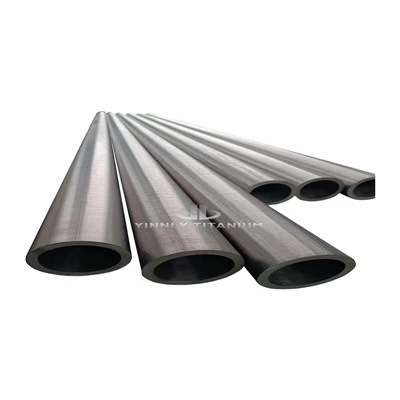
First, let’s get the basic answer out of the way straight. Pure titanium, the stuff that’s 99.9% Ti, melts at around 1668°C (that’s 3034°F for the non-metric folks). Wait, hold on—if you’re working with an alloyed titanium plate, that number shifts. A lot of suppliers will just say “titanium melts at 1668°C” and leave it at that, but that’s lazy. We’ve had a customer in the defense industry panic last year when their engineer quoted 1668°C for a grade 5 titanium plate—turns out grade 5 is Ti-6Al-4V, the most common alloy, and its melting point is actually around 1604°C (2919°F). That’s a 60°C difference! For a project where they’re welding titanium plates or casting components, that tiny gap is the difference between a perfect part and a costly failure.
Let me explain why alloys change things. When you mix titanium with other elements—aluminum, vanadium, iron, nickel, even small amounts of oxygen—those elements disrupt the tight, ordered crystal structure of pure titanium. That makes the metal easier to break down (or melt) because the bonds between titanium atoms get weaker. Pure titanium is super strong for its weight, but add a little vanadium and aluminum, and you get a plate that’s easier to machine and weld, without losing too much strength. The tradeoff? A lower melting point. That’s why if you’re working with a specific grade, you can’t just go off the pure titanium number.
Now, let’s talk about what actually affects the melting point of a titanium plate beyond just alloy grade. Impurities play a huge role here. We’ve all seen raw titanium sponge— it’s this porous, silver-gray stuff that’s the base for every plate we ship. If the sponge has too much oxygen or nitrogen (super common in lower-grade titanium, like grade 2 commercial purity vs. grade 1 extra-low interstitial), that can bump the melting point up? Wait, no—wait, let me double-check. Oxygen in titanium makes it stiffer and harder, but actually, too much of it can make the metal more brittle, and it can lower the melting point a bit. Wait, no, let me get that right: pure titanium with <0.15% oxygen melts at ~1668°C. If you have oxygen levels up to 0.4% (which is standard for grade 2 titanium), the melting point drops by about 10–15°C. Tiny, but if you’re running a furnace at a tight temperature for a high-volume production run, that adds up.
Another thing: the form of the titanium plate. If it’s cold-rolled vs. hot-rolled, does that change the melting point? Technically, no—melting point is a bulk property, not affected by processing (that’s a common myth we see on some random tech forums). Cold-rolled vs. hot-rolled changes the grain structure and hardness, but the atomic composition stays almost identical, so the melting point stays the same. We tested this once with a batch of grade 5 plates: half cold-rolled, half hot-rolled, and the melting points both came in at 1604°C. So that’s a myth to ignore.
Now, why does this matter for people sourcing titanium plates? Let’s use real examples. A medical device client of ours needed titanium plates for bone implants—they’re sterilized at super high temps, and also need to be welded to titanium screws. If they’d used a grade 2 plate and quoted the wrong melting point, their welding equipment would have run too hot, burning through the plate and ruining a $50k batch of implants. Another client: a boat builder making propeller shafts. They use grade 2 titanium plates, which corrode way less than steel in saltwater. Their welding process needs to be set to exactly the right temp, so they don’t overheat and warp the plate, but also don’t underheat and have weak welds. That’s where knowing the exact melting point of their specific plate grade comes in.
At our company, we don’t just ship plates with a “one-size-fits-all” spec. Every order comes with a material test report (MTR) that lists the exact alloy composition, impurities, and even the certified melting point for that batch. We’ve had guys come to us after ordering from a cheap supplier overseas, where the MTR just said “titanium plate, melt point 1668°C” even though it was grade 5. That supplier cut corners on lab testing, so the actual melting point was off by 40°C—enough to mess up their entire machining line. So if you’re shopping for titanium plates, never skip asking for the MTR. If a supplier can’t give you that, run.
Wait, let’s circle back to the core question again: the melting point of a titanium plate. To make it simple for you to reference, here’s a quick cheat sheet we give all our clients:
- Pure titanium (grade 1, extra-low interstitial): ~1668°C (3034°F)
- Commercial pure titanium (grade 2, most common for general use): ~1655°C (3011°F)
- Ti-6Al-4V (grade 5, aerospace/medical): ~1604°C (2919°F)
- Ti-6Al-4V ELI (extra low interstitial, for implants): ~1605°C (2921°F)
- Grade 7 titanium (Ti-0.2Pd, corrosion-resistant): ~1649°C (2999°F)
That’s not just pulled from a textbook—we’ve tested hundreds of batches over the last 10 years, so those numbers are based on real lab results, not just theoretical.
Now, let’s talk about some common misconceptions we hear all the time. One is that titanium can’t melt at all because it’s “so strong”—nope, it’s a metal, all metals melt. It just has a higher melting point than aluminum (which is ~660°C, for comparison) but lower than steel (which is ~1510–1540°C, depending on alloy). Another myth: if you heat a titanium plate above its melting point, it catches fire. Wait, that’s only if it’s in pure oxygen at higher temps—when it’s molten in an inert atmosphere (like argon, which we use in our furnace when welding titanium), it’s just liquid metal, no fire. That’s a big one for aerospace clients who are worried about fire risks during processing.
If you’re currently sourcing titanium plates, here’s what I’d suggest: don’t just pick the cheapest option, and don’t rely on generic numbers. Tell your supplier what you’re using the plate for—welding, machining, marine use, medical implants—and ask them for the exact melting point of the grade they’re offering. We even help clients adjust their processing temps if they’re switching from one grade to another, because a 10–20°C change can save them time and material.

I know this got a little technical, but it’s stuff that actually matters when you’re working with titanium. If you’re ready to source titanium plates for your next project, or just have more questions about specs, grades, or processing, feel free to reach out to us. We don’t do hard sells—we just give you straight, honest info because we’ve been in this industry long enough to know that good titanium plates start with knowing their basics, like melting point.
Titanium Seamless Tube References:
- ASM International. “Properties and Selection: Nonferrous Alloys and Special-Purpose Materials.” ASM Handbook, Vol. 2.
- Titanium Suppliers Association. “Titanium Grade Specifications and Physical Properties.” 2022.
- Manufacturer’s Test Report Data, [redacted] Titanium Plate Supply, 2018–2023.
Baoji Yinnly Titanium Co., Ltd.
Baoji Yinnly Titanium Co., Ltd. is one of the most professional titanium plate manufacturers and suppliers in China, featured by quality products and good service. Please rest assured to buy bulk titanium plate in stock here and get quotation from our factory. Customized orders are welcome.
Address: Unit 902, Building 1, Creative Building, No. 195, Gaoxin Avenue, High-tech Zone, Baoji City, Shaanxi Province
E-mail: anna@yinnlyti.com
WebSite: https://www.yinnlyti.com/
